On Leadership
Leading From the Fog: What Medical Leadership Actually Requires

There is a Japanese concept, ma, that describes the pause between notes in music, the space that gives sound its meaning. For my 50th birthday, I took my son Owen to Japan — Tokyo, Nagano, Kyoto, Osaka — a trip of a lifetime. On the last day, we sat on a bench together and looked up at the Umeda Sky Building, that extraordinary double tower floating above Osaka with sky visible straight through its centre. In that pause, between the noise of four cities and the flight home, I shared with him the three things I actually believe about leadership: provide for your family, because your team is your family; be the best example you can be; and inspire those around you to be the best they can be. Everything I have learned since confirms that those three ideas, simple enough to say on a bench, are the hardest things in the world to actually do.

I have been thinking about that kind of deliberate space ever since. Because medical leadership, at its best, is not about filling every moment with action. It is about knowing when to pause, when to convene, and when to trust the people around you.

This is harder than it sounds. Most physicians were trained in a world of clear problems and correct answers. You gather data, you diagnose, you treat. Leadership does not work that way. The problems are messier. The feedback loops are slower. And the people you are trying to move are just as smart as you are, often more so.
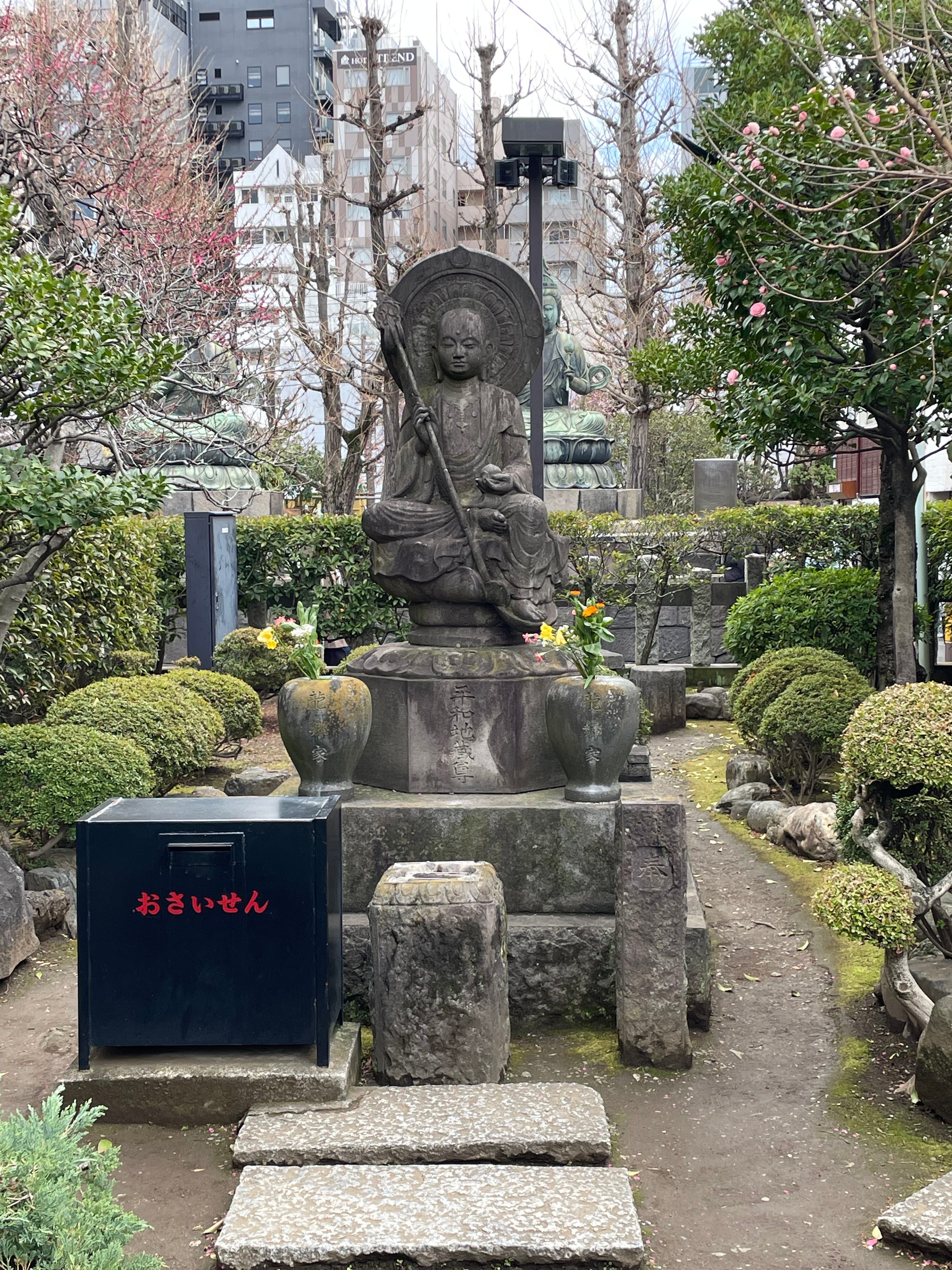
Complexity theory offers a useful frame here. Healthcare systems are not machines. They are living ecosystems, full of feedback, adaptation, and emergence. In a complicated system, you can engineer your way to a solution. In a complex one, the solutions have to grow. As the physicist Fritjof Capra observed, the properties of a living system emerge from the relationships between its parts, not from the parts themselves. The leader’s job is not to control that system. It is to tend it, like a Zen Garden.
This has real implications for how we show up. Too many leadership development programs still teach the heroic model, the visionary at the front of the room, commanding a PowerPoint. But the most effective leaders I have encountered in medicine work differently. They create conditions. They ask the right questions. They use what Liberating Structures practitioners call minimum specs: the smallest set of constraints needed to release the intelligence in the room, without engineering the outcome in advance. Thirty-three Liberating Structures, from Impromptu Networking to Troika Consulting, are built on the same premise: human capacity is not a problem to be managed, it is a resource to be liberated.

Steve Jobs put it more bluntly. He once said that it makes no sense to hire smart people and then tell them what to do. You hire smart people so they can tell you what to do. That instinct, genuine curiosity about what the people around you actually know, is rarer in medicine than we like to admit.
It shows up in small moments. The elevator pitch that opens a door. The hallway chat that drops the formality and lets people say what they actually think. Napoleon Bonaparte, no stranger to command, understood this intuitively. He made a habit of walking among his soldiers before battle, not to deliver orders, but to listen. He wanted to know the texture of his army’s confidence. That kind of presence, what Aristotle called phronesis or practical wisdom, cannot be replicated by a survey or a dashboard.

Alexander the Great reportedly told his generals that he feared an army of sheep led by a lion far more than an army of lions led by a sheep. Leadership character matters more than leadership position. This is as true in a palliative care unit as it is on a battlefield. A title like “medical director” confers authority. Trust has to be earned differently, through consistency, through intellectual honesty, through showing up when things are hard.
Einstein wrote that imagination is more important than knowledge. Medical leaders who have thrived through system change tend to share that quality, not naivety, but the disciplined willingness to ask what this could look like rather than only what it has always looked like.

And then there is the matter of powerful friends. Every transformative initiative in health care I have witnessed required relationships built long before they were needed. Not transactional networking, but genuine investment in people who see the same problems you see and are willing to work on them together. Aristotle called these philia, friendships grounded in shared virtue, not mutual advantage.

The work of medical leadership is not heroic. It is relational, iterative, and often invisible. It happens in the pause before you speak, in the question you decide not to answer yourself, in the space you make for someone else to lead.
It happens on a bench in Osaka, looking up at the sky through the middle of a building, telling your son what you believe.